

Sustainability
Benexia is a 100% chia seed dedicated company with over 20 years of supporting farming activities in Bolivia and Argentina, developing clean chia ingredients and healthy products for final consumers. We have always considered sustainability to be a fundamental part of our activities. Benexia grew from an agricultural company to a renewed industrial actor in the food industry with very strong values that define us as a group of people to offer our customers the most sustainable, superior-quality chia.
2023 Sustainable Performance and Progress Report
“We are proud to present the Benexia Sustainability Report showcasing our ongoing commitment to responsible and eco-friendly practices. This report highlights our efforts in regenerative agriculture, sustainable production, and our dedication to the integrity and well-being of our people and communities.
We aim to contribute to a healthier planet by prioritizing innovation and environmental stewardship while delivering high-quality, nutritional products.
We invite you to explore how we are shaping a greener and healthier future through our actions and initiatives.”
Teresa Domeyko
Sustainability and Corporate Communications Manager
Social and Environmental Responsibilities
- Vertically integrated, Benexia was born from a farming initiative whose aim was to improve the economy and farmer welfare in North Western Argentina
- Our supply chain incorporates carbon reduction efforts at every step from production to processing and distribution
- Our processing plant is near ZERO waste
- We select the most ecological (recyclable and compostable) packaging solutions available for the preservation of our planet
- B-certified corporation (certification in process)
Regenerative Agriculture

Reduces Carbon

Refreshes Waterways

Revitalizes Communities
Sustainability is one of our core values, something we are passionate about and have intentionally integrated into every aspect of our business, starting in our fields.
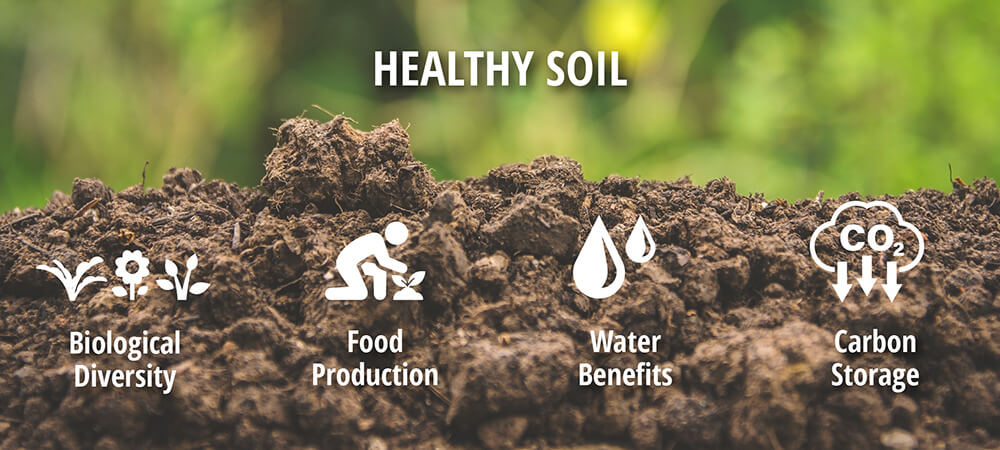
Transitioning to more sustainable forms of agriculture is becoming ever more important to the future of the global food supply and our planet, as traditional agricultural practices can have serious negative impacts on the environment. In essence, regenerative agriculture is a system of farming principles aimed at maintaining, rehabilitating, and enhancing the entire ecosystem around the farm. It focuses on building healthy fertile soil, increasing biodiversity, and creating healthier water systems and stronger farming communities.
SHIFT THE PARADIGM, PARTNER WITH NATURE
Core principles of regenerative agriculture
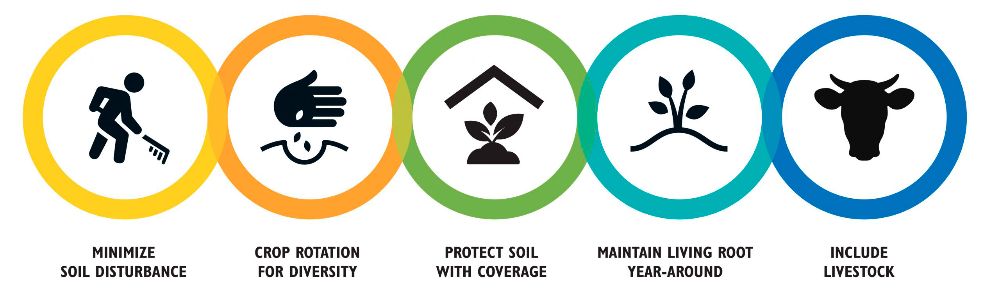
ALL OF THESE ACTIONS WORK SYMBIOTICALLY TO HELP FIGHT THE CLIMATE CRISIS BY PULLING CARBON FROM THE ATMOSPHERE AND SEQUESTER IT IN THE GROUND
Discover our regenerative practices
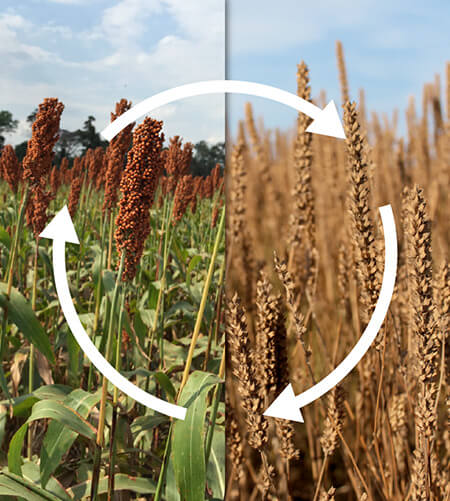
Each plant has a specific nutrient requirement and level of carbon absorption. Rotating crops with different types of plants allows the soil to maintain a balance in terms of nutrient consumption. It also allows time for the soil to regenerate and self-regulate soil carbon levels.
We rotate our chia with sorghum, sunflower, soy, maize, and rice that is used both to keep local to support and feed nearby communities and for exportation.

At Benexia, we rotate crops in the fields because it allows us to:
- Select the most suitable crops for the season which both maximizes their growth and reduces the need for herbicides.
- Diversify our crops, minimizing the risk of plagues and other diseases.
- Let the soil rest between crops ensuring a natural and organic return of essential nutrients and neutralization of the soil’s pH.
We use natural rainfall as the only needed source of water for all crop growth.
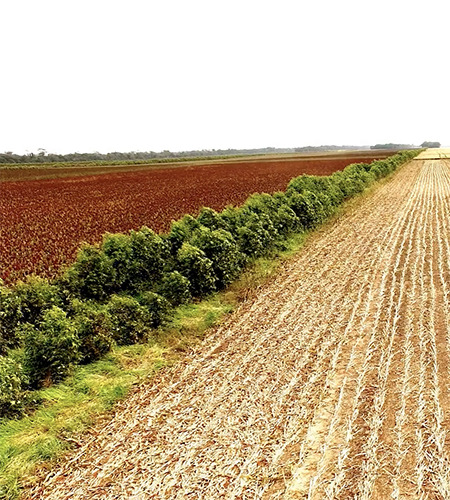
Each of our productive fields has a 40-meter perimeter of dense native forest and diverse vegetation. This:
- Protects our crops from the wind, one of the major causes of soil erosion.
- Promotes plant and animal diversity by allowing a natural forest highway for the free movement of natural biodiversity.
- Protects against water erosion. These barriers minimize the potential displacement of soil by surface water runoff which strengthens the soil and promotes native biodiversity and plant pollination.
Tilling is a process where the top six-ten inches of soil are turned over before planting new crops. The theory is that this aerates and warms the soil and blends surface crop residues, animal manure, and weeds into the soil. While this sounds like a good thing, it has many negative effects on soil quality. On our farms, we keep the soil intact and plant our chia seeds directly into the layers of nutrient-rich soil.
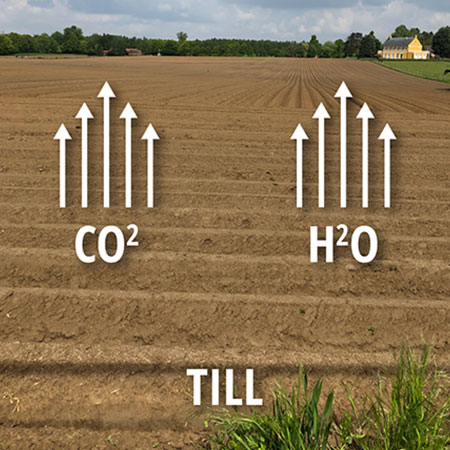
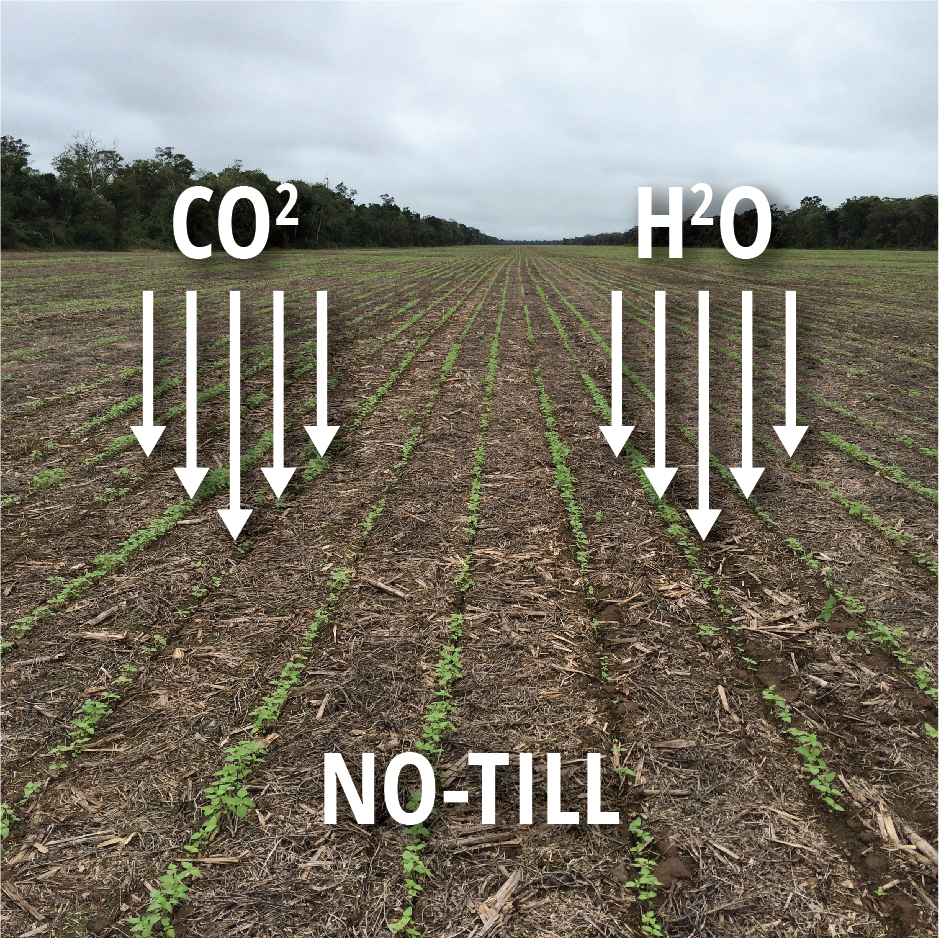
Here’s Why We Use No-Tilling Practices
|
Tilling Practices |
No-Tilling Practices |
| Breaks the soil structure, making the ground prone to runoff and erosion. | Keeps the soil structure intact and protected by the crop residue, allowing the soil to more readily absorb water. This reduces erosion and runoff and prevents pollution from entering nearby waterways. |
| Cause water to evaporate quickly which reduces irrigation efficiency and diminishes crop yield. | Lead to slower water evaporation which means increased irrigation efficiency and higher crop yields. |
| Dislodge and kill off microbes and insects that are needed to develop and maintain healthy soil biology. Long-term tilling eventually makes soil dependent on chemicals for productivity. | Beneficial soil organisms feed off of the soil’s organic matter. As soil’s organic matter improves, so does the soil’s structure—improving its ability to grow more nutrient-dense crops. |