
What makes a good protein source?
Protein content is an obvious part of the answer. But nutrition, accessibility and environmental impact can also play an important role.
A new framework developed by University of Cambridge researcher Dr. Chris Macdonald takes this broader approach. Published in Frontiers in Sustainable Food Systems and recently highlighted by B2B food innovation publication Vegconomist, the Better Protein Institute (BPI) Score evaluates 20 high-protein foods across two dimensions: People + Planet. The framework is intended to evolve as evidence and methods develop.
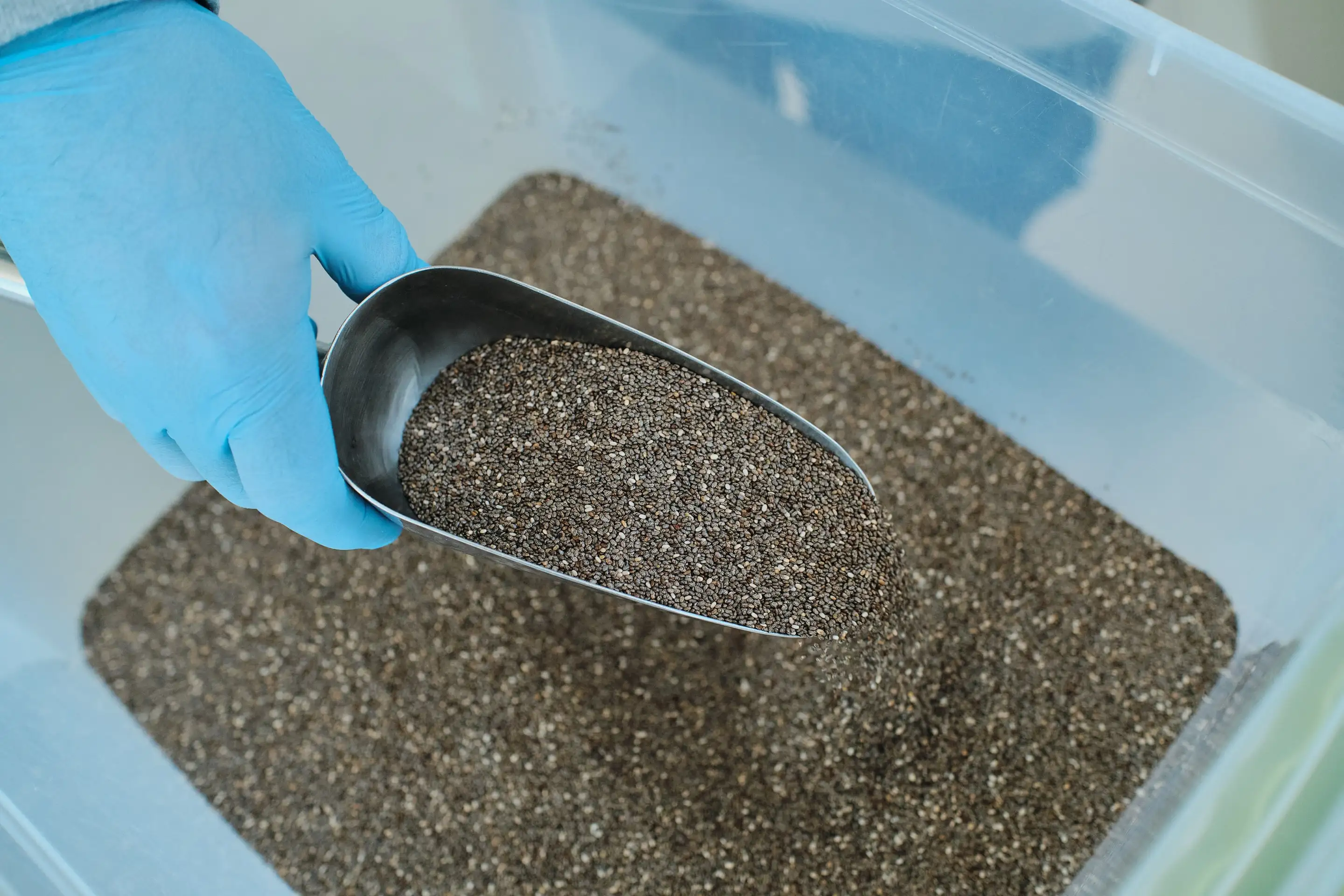
The results placed chia seeds #2 overall, just behind tofu.
The assessment also revealed a broader trend: plant-based foods occupied the entire top quintile of the ranking, while the lowest quintile consisted entirely of animal-based foods.
Looking beyond protein content
One of the ideas behind the BPI Score is simple: looking at a single characteristic of a food can leave out important parts of the picture.
The framework therefore brings several factors together.
The People Score considers sodium, saturated fat and cholesterol, protein completeness, affordability and supermarket availability.
The Planet Score evaluates greenhouse gas emissions, water pollution, land use and freshwater use, using 100 g of protein as the basis for comparison.
A high combined ranking reflects performance across multiple indicators, rather than demonstrating that a food has the smallest footprint in every environmental category. By combining these dimensions, the BPI Score provides a broader perspective on the choices behind the protein we consume.
And chia performed strongly in that combined assessment, emerging as the second-highest-ranking protein source among the 20 foods evaluated.
From chia’s nutritional potential to food formulation
For the food industry, these findings offer another reason to look at chia beyond what it is traditionally known for.
Chia is widely recognized for its fiber and ALA omega-3 content. Its strong position in this new protein assessment brings another dimension of its nutritional potential into focus: protein.
At Benexia®, we work to translate the nutritional potential of chia into functional ingredients that can be incorporated into real food applications.
Xia Powder-125 LM, our chia-based functional ingredient containing approximately 42% protein, gives formulators a plant-based option for exploring new protein-focused and better-for-you food concepts.
Explore the potential of chia protein
Looking for new possibilities for your next formulation?
Talk to our team:
info@benexia.comThe BPI Score evaluated chia seeds as a food/protein source and did not specifically evaluate Xia Powder-125 LM.
Sources: Chris Macdonald, Frontiers in Sustainable Food Systems (2026), “What are the best sources of protein? Introducing the BPI Score”; Vegconomist, “Cambridge Researcher Ranks 20 Protein Sources, With Plant-Based Foods Filling the Entire Top Quintile.”